
PocketGuard vs. Goodbudget: one narrow win, two different habits
PocketGuard wins this 2026 comparison, 4.8 to 4.5, because its automatic tracking and safe-to-spend guidance help more people with less maintenance. Goodbudget remains the better choice for hands-on envelope planning and structured household conversations. Pick PocketGuard to automate awareness; pick Goodbudget to practice deliberate allocation.
| Category | PocketGuard | Goodbudget | Winner |
|---|---|---|---|
| Overall score | 4.8/5 | 4.5/5 | PocketGuard |
| Budgeting method | Flexible categories and safe-to-spend | Digital envelopes allocated first | Tie: preference |
| Bank automation | Core strength; free connections available | Plus only; eligible U.S. banks | PocketGuard |
| Household planning | Shared view is possible | Shared envelopes across devices | Goodbudget |
| Free plan | Broad automatic overview | 20 envelopes, 1 account, 2 devices | PocketGuard |
| Annual paid price* | $74.99 | $80 | PocketGuard |
| Manual/privacy-first use | Possible, not the main design | Mature manual workflow and import | Goodbudget |
| Investments | Basic net-worth context | Not designed for investments | PocketGuard |
*Official U.S. web prices checked August 5, 2026; taxes, promotions, and app-store offers can vary.
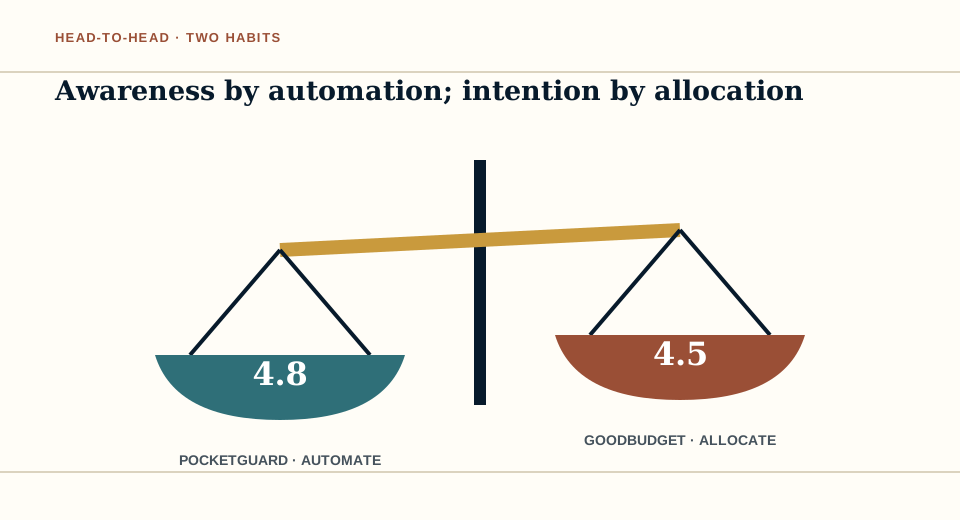
The real difference is timing
PocketGuard and Goodbudget both produce category balances, but they ask for attention at different moments. PocketGuard gathers transactions first, recognizes bills, applies limits, and calculates money that is not already claimed. You can begin with imperfect settings and refine them as the dashboard learns the month. Its central question is, “Given what is happening, what remains safe?”
Goodbudget asks you to fund envelopes before spending and update them as transactions occur. Its question is, “What did we decide this money should do?” That creates more friction and more intention. Neither sequence is morally superior. People who repeatedly stop opening finance apps benefit from PocketGuard’s background work. People who repeatedly spend without consulting a plan may benefit from Goodbudget’s deliberate pause.
Round 1: core budgeting
Result: a methodological tie. PocketGuard scored 4.9 for core budgeting in our full review. Its “In My Pocket” number accounts for recurring bills, planned spending, and goals, giving flexible budgeters an immediate operational answer. Debt planning and category limits broaden that answer without demanding a finance course.
Goodbudget scored 4.7, but envelope loyalists may reasonably reverse the order. Its planned allocation is easier to explain around a kitchen table, and moving money between envelopes makes a tradeoff explicit. Annual and goal envelopes also handle irregular bills cleanly. PocketGuard wins on immediate guidance; Goodbudget wins on commitment to a plan.
Round 2: syncing and transaction work
Winner: PocketGuard. Connected accounts are central to PocketGuard, including on its free plan. In our test, 89.9% of transactions were correctly categorized on first review, and Plus rules made repeat corrections durable. Sync delays still occurred, but the system remained useful after several unattended days.
Goodbudget Plus supports sync only for eligible U.S. institutions. Manual entry and web imports are respectable alternatives, not broken fallbacks, but they consume attention. A shared plan can become misleading if one partner enters purchases and the other waits until Sunday. For people seeking automatic expense tracking, this round creates most of PocketGuard’s overall lead.
Round 3: couples and household planning
Winner: Goodbudget. Shared envelope balances give two people a concrete plan to inspect together. The app works best when a household has a weekly ten-minute check-in, fills upcoming envelopes, and discusses transfers. It turns the budget into a small shared practice instead of an individual dashboard someone occasionally shows a partner.
PocketGuard can aggregate a household’s accounts into a useful common picture, but collaboration feels less intentional. Couples primarily seeking one automatic view may still prefer it. Couples wanting distinct participation in the planning ritual should start with the free version described in our Goodbudget review.
Round 4: cost and free value
Winner: PocketGuard, narrowly. PocketGuard Plus was $12.99 monthly, $74.99 annually, or $99.99 lifetime on our check date. Goodbudget Plus was $10 monthly or $80 annually. PocketGuard’s annual price is $5.01 lower and its lifetime option can be compelling, although lifetime purchases carry product-longevity risk.
The free comparison depends on need. PocketGuard provides the stronger automated overview. Goodbudget provides enough envelopes to run a real manual budget but limits the plan to one account and two devices. Both let you test their essential philosophy without starting a short trial, which is more important than small annual price differences.
Round 5: privacy, data control, and support
Winner: Goodbudget for manual users; otherwise a tie. Any bank-connected budget app involves financial-data providers and their operational risk. Goodbudget lets a household avoid connecting accounts and still use its mature manual system. PocketGuard is substantially less useful without connections because aggregation powers its best answer.
Goodbudget Plus includes seven years of history and email support; PocketGuard provides export and security controls but scored slightly lower in our support-and-privacy category. Readers should inspect each company’s current privacy policy and deletion process, use unique credentials, and remember that “read-only” limits money movement but does not make transaction data non-sensitive.
Final recommendation
For a real-world interruption, our $1,640 car-repair case study shows automation and manual allocation working side by side.
Choose PocketGuard if you want the broadest chance of still using the app after the novelty passes. Automatic activity, useful defaults, and a safe-to-spend number reduce the daily burden. It also leads our larger 2026 budgeting-app ranking, where it faces YNAB, Monarch Money, Quicken Simplifi, Rocket Money, and Goodbudget.
Choose Goodbudget if the work is the point. The act of funding an envelope and recording a purchase can change behavior precisely because it cannot disappear completely into automation. If neither description sounds right, our eight-question choosing guide covers irregular income, subscriptions, investments, and spreadsheet alternatives. PocketGuard wins narrowly on our weighted model; fit should make the final call.