
Storm Drill: The Budget After a $1,640 Car Repair
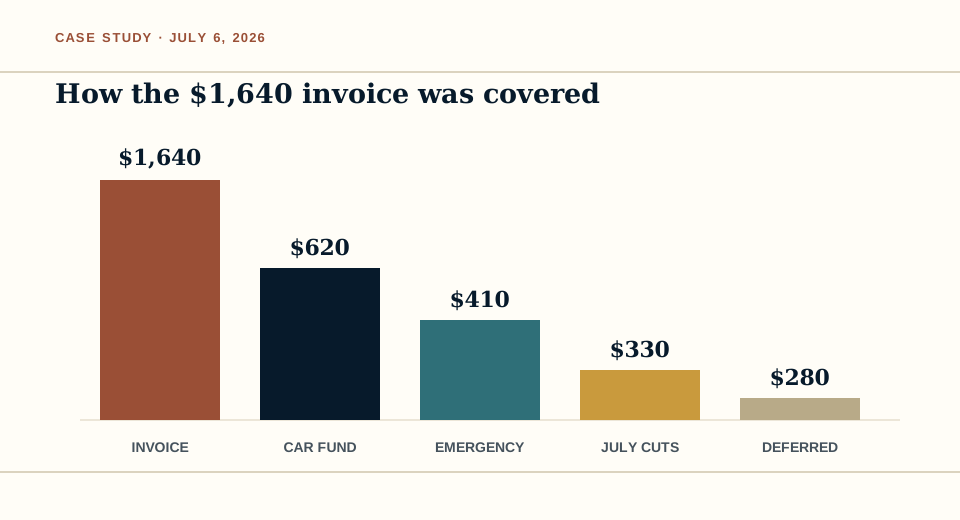
A $1,640 car repair on July 6, 2026 did not destroy the budget, but it exposed a $410 gap. We covered $620 from a car fund, $410 from emergency savings, $330 from July cash-flow cuts, and $280 by delaying optional purchases. No balance stayed on a credit card; rebuilding began four days later.
The warning light appeared on Sunday, July 5. By 10:20 a.m. Monday, the shop had diagnosed a failing alternator, worn belt tensioner, and weak battery. The written estimate was $1,718 including tax. The car was needed for a 34-mile work commute, but “needed” did not make the first number unquestionable.
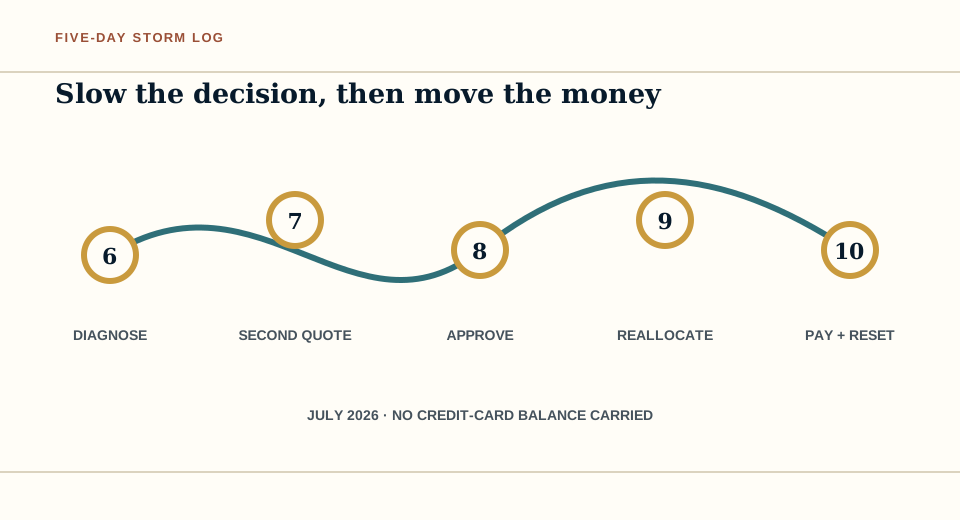
Day one: define the emergency
We asked the shop to separate safety-critical work from recommended maintenance and to send part numbers and labor hours. The alternator and tensioner could not reasonably wait; the battery tested marginal, not failed. A second reputable shop quoted $1,522 for aftermarket parts with a shorter warranty. The first shop matched the labor rate, retained the longer-warranty alternator, and removed one diagnostic duplication. Final invoice: $1,640 on July 8.
Available before the repair: $620 car-maintenance sinking fund + $1,000 starter emergency fund.
Constraint: Keep at least $500 of emergency cash and avoid carrying a card balance past August 3.
Decision: Approve essential work after one comparable quote; delay a $280 desk purchase and trim July’s flexible categories.
| Source | Amount | Share | Tradeoff | Rebuild date |
|---|---|---|---|---|
| Car sinking fund | $620 | 37.8% | Fund reduced to $0 | $80/month from Aug. 7 |
| Emergency fund | $410 | 25.0% | Reserve fell to $590 | $70/week from July 14 |
| July flexible cuts | $330 | 20.1% | Dining, trips, clothing reduced | Ends July 31 |
| Deferred desk purchase | $280 | 17.1% | Revisit after October 1 | No automatic catch-up |
| Total | $1,640 | 100% | Paid without a carried card balance | |
What the budget changed—and protected
We froze four July categories at their July 8 balances. Dining had $126 remaining, weekend travel $94, clothing $70, and household upgrades $40: $330 total. Groceries, medication, fuel, rent, utilities, insurance, minimum debt payments, and the employer retirement match remained untouched. An emergency should not be funded by creating another foreseeable emergency.
The $280 desk was not “saved” unless it remained unspent. We removed it from the July shopping list and scheduled a decision for October 1, 2026 rather than quietly buying it after payday. That distinction matters: postponement creates temporary capacity; cancellation creates permanent savings.
Why we used the emergency fund
The repair was unplanned, necessary for work, and larger than the category reserved for it. That met our definition. We could have left emergency savings intact and carried $410 on a card at 24.49% APR, but preserving the label on an account while paying interest would have mistaken the fund for a museum piece.
We did not empty the account. A $500 floor remained for medication, urgent travel, or a second failure. Readers without that margin may need to compare a payment plan or credit option carefully; our case is a record of one household’s numbers, not proof that every repair fits cash.
The rebuild started while the invoice was fresh
On July 10 we scheduled $70 weekly transfers beginning July 14. At that pace the $410 emergency withdrawal will be restored by August 18, allowing for the last $60 transfer to be reduced. The car fund restarts at $80 a month on August 7 and reaches $960 by July 2027, close to the prior year’s maintenance and registration total.
We also raised the car-fund target from $750 to $1,200 after reviewing three years of repairs. That is not a prediction that the next bill will be $1,200. It reflects an aging vehicle and a deductible-sized amount that can prevent routine wear from competing with true emergencies.
The drill we will repeat
First, get a written diagnosis. Second, separate essential from recommended work. Third, obtain one genuinely comparable quote when time allows. Fourth, inventory cash by purpose before touching credit. Fifth, protect essentials and document every temporary cut. Finally, schedule the rebuild before normal spending expands into the space.
The budget did not prevent the alternator from failing. It turned a high-pressure morning into six bounded decisions. Our 11-week starter-fund diary shows how the reserve was built, while the annual-bill calendar keeps predictable car costs out of the storm category. For app help, see the 2026 rankings.
Frequently asked questions
Is a car repair an emergency-fund expense?
Yes when it is unplanned, necessary for safety or income, and larger than the maintenance fund available. Routine oil changes, tires, registration, and known wear belong in a car sinking fund.
Should I put a repair on a credit card for rewards?
Only if the shop charges no card fee and you already have cash reserved to pay the full statement balance. Rewards are not a saving when the purchase creates interest or weakens the repair price.
How much should a car-maintenance fund hold?
Use the vehicle’s age, mileage, deductible, and several years of actual costs. Our household raised its target to $1,200; a newer car under warranty may need less, while an older essential vehicle may need more.